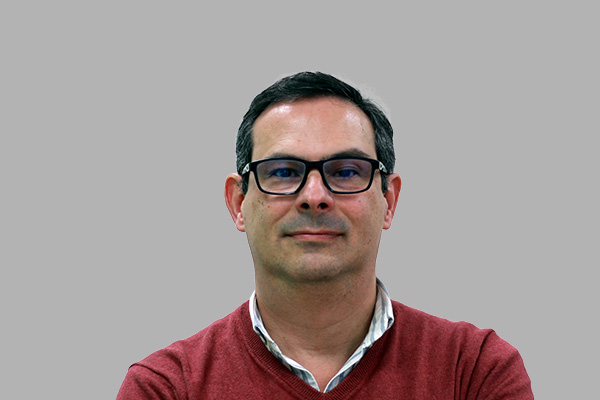
Biography

Dr. Francisco J. Díaz-Corrales graduated as a Medical Doctor (M.D.) from the University of Los Andes (Venezuela) in 1996, graduating Cum Laude and ranking first in his class (degree officially recognized by the Spanish Ministry of Education and Science). He completed his residency in Neurology at the University Hospital of Los Andes in 2002 and obtained his Ph.D. in Medical Sciences from Okayama University (Japan) in 2006. His doctoral research focused on neurodegeneration, investigating the molecular mechanisms underlying Parkinson’s disease and the development of novel therapeutic approaches (degree officially recognized by the University of Seville).

Following his Ph.D., he moved to Spain to undertake an international postdoctoral fellowship at the Department of Neurology, Virgen del Rocío University Hospital (Seville), supported by a Carolina Foundation/BBVA fellowship. In 2008, he joined the Andalusian Center for Molecular Biology and Regenerative Medicine (CABIMER) through a competitive JAE-Doc fellowship awarded by the Spanish National Research Council (CSIC). He became an Emerging Principal Investigator in 2019 and, since July 2021, has led the Retinal Neurodegeneration and Advanced Therapies Research Group at CABIMER.

Dr. Díaz-Corrales has secured several prestigious competitive research contracts, including the Miguel Servet (2016–2021), Nicolás Monardes (2021–2025), and Consolidación Investigadora (2024–2026) programs. He has served as Principal Investigator on 17 competitive regional and national research projects, including collaborative projects with industry, competitive human resources grants, and training fellowships. Over the past decade, he has led 11 nationally funded research projects, established collaborations with industry and private foundations, and secured more than €1 million in competitive research funding. He currently coordinates a European consortium preparing Horizon Europe proposals focused on the bioprinting of artificial retinas.

His research focuses on retinal neurodegeneration and the development of advanced therapies for inherited and age-related retinal diseases. His main interests include the neuroprotective effects of small molecules, the development of cell- and gene-based therapies, and the identification of biomarkers for Retinitis Pigmentosa (RP) and Age-related Macular Degeneration (AMD). His laboratory has established induced pluripotent stem cell (iPSC) technology for disease modelling and has developed three-dimensional retinal cultures and retinal organoids as translational experimental platforms.

Dr. Díaz-Corrales has published 59 peer-reviewed scientific articles (Scopus: FWCI 2.67; 2,319 citations; h-index 25), authored three book chapters, and is co-inventor of five patents, one of which has been licensed to industry. He is also co-founder of Limnopharma S.L., a biotechnology spin-off developing innovative therapies for RP and AMD.

He has established strong national and international collaborations with leading institutions, including the Karolinska Institutet and Harvard University, and actively contributes to several collaborative research networks. He currently serves as Vice-Chair of the Management Committee of the European COST Action Retina4Future, and is a member of the ISCIII RICORS Network on Inflammatory Diseases, the CSIC Rare Diseases Network, and the RST Biomed Network.

His translational research is carried out in close collaboration with ophthalmologists at Virgen Macarena University Hospital, as well as with patient organizations and biotechnology companies. He has organized major international scientific meetings in retinal degeneration, including RD2023 and ISER2026, and has supervised three Ph.D. theses and twelve Master's dissertations, including Erasmus+ students from CPE Lyon (France).

Dr. Díaz-Corrales also serves as a reviewer for the Spanish State Research Agency (AEI), ISCIII, and ANEP, and is a member of the Scientific Advisory Board of the Mácula Retina Association and the ONERO Rare Diseases Network. He has served as Guest Editor for the International Journal of Molecular Sciences and Frontiers in Cell and Developmental Biology. In addition to his research activities, he is actively engaged in science outreach through initiatives such as the European Researchers' NightUniStem Day, and educational activities for patient associations.

His contributions to retinal research have been recognized with the FUNDALUCE Award 2023 (Foundation Fighting Blindness, Spain), and he was awarded the R3 Research Excellence Certificate by the AEI in 2023.

Current Projects

Education

Formación académica

  • 1996 – Licenciado en Medicina y Cirugía, Universidad de Los Andes (Venezuela). Graduado Cum Laude y primer puesto de la promoción (título homologado por el Ministerio de Educación y Ciencia de España).
  • 2002 – Especialista en Neurología, Hospital Universitario de Los Andes (Venezuela).
  • 2006 – Doctor en Ciencias MédicasUniversidad de Okayama (Japón). Tesis doctoral centrada en los mecanismos moleculares de la neurodegeneración y el desarrollo de nuevas estrategias terapéuticas para la enfermedad de Parkinson (título homologado por la Universidad de Sevilla).

Academic Education

  • 1996 – M.D. (Medicine), University of Los Andes (Venezuela). Graduated Cum Laude and ranked first in his class (degree officially recognized by the Spanish Ministry of Education and Science).
  • 2002 – Residency in Neurology, University Hospital of Los Andes (Venezuela).
  • 2006 – Ph.D. in Medical SciencesOkayama University (Japan). Doctoral research focused on the molecular mechanisms of neurodegeneration and the development of novel therapeutic strategies for Parkinson's disease (degree officially recognized by the University of Seville).

Featured publications