



Biography
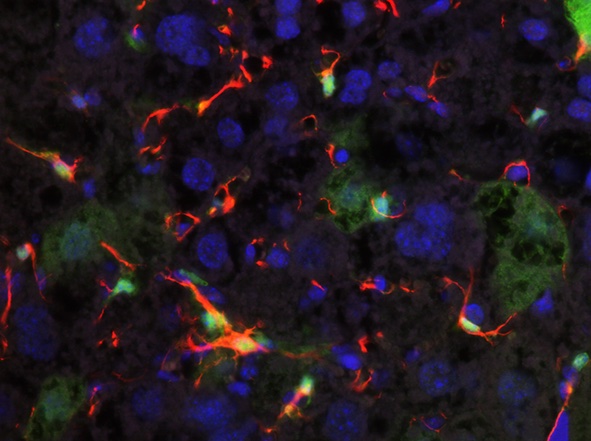 Cells are not static entities. Their ability to adapt and transition between functional states is a fundamental property that underlies tissue homeostasis, repair and adaptation to environmental change. However, the same mechanisms that support tissue regeneration can also drive disease when their regulation becomes disrupted. Understanding how the programs governing cellular plasticity are established, maintained and reversed is one of the central challenges in modern biology. Our laboratory investigates these processes to uncover fundamental principles of cellular regulation and to identify new strategies for reprogramming pathological cell states towards beneficial tissue function.
Cellular Plasticity and Regulatory Programs in Chronic Disease
Cells continuously adapt their functional state in response to developmental cues, tissue injury and changes in their microenvironment. This ability to reversibly acquire distinct functional states, known as cellular plasticity, is essential for maintaining tissue homeostasis and promoting repair. However, when these adaptive programs become dysregulated, they can drive chronic fibrosis, cancer progression and other pathological conditions.Our laboratory investigates how transcriptional and metabolic programs regulate cellular plasticity in health and disease. We seek to understand how microenvironmental cues reshape gene expression and cellular metabolism to determine cell-state transitions, how pathological states become established and maintained, and how these processes can be reversed through therapeutic reprogramming. Our studies have uncovered transcriptional mechanisms that regulate hepatic stellate cell plasticity during liver fibrosis and hepatocellular carcinoma. Building on these discoveries, we aim to identify shared regulatory mechanisms that govern cellular adaptation, tissue remodelling and chronic disease progression across different organs and biological contexts.
Research Areas
Regulatory Programs Gov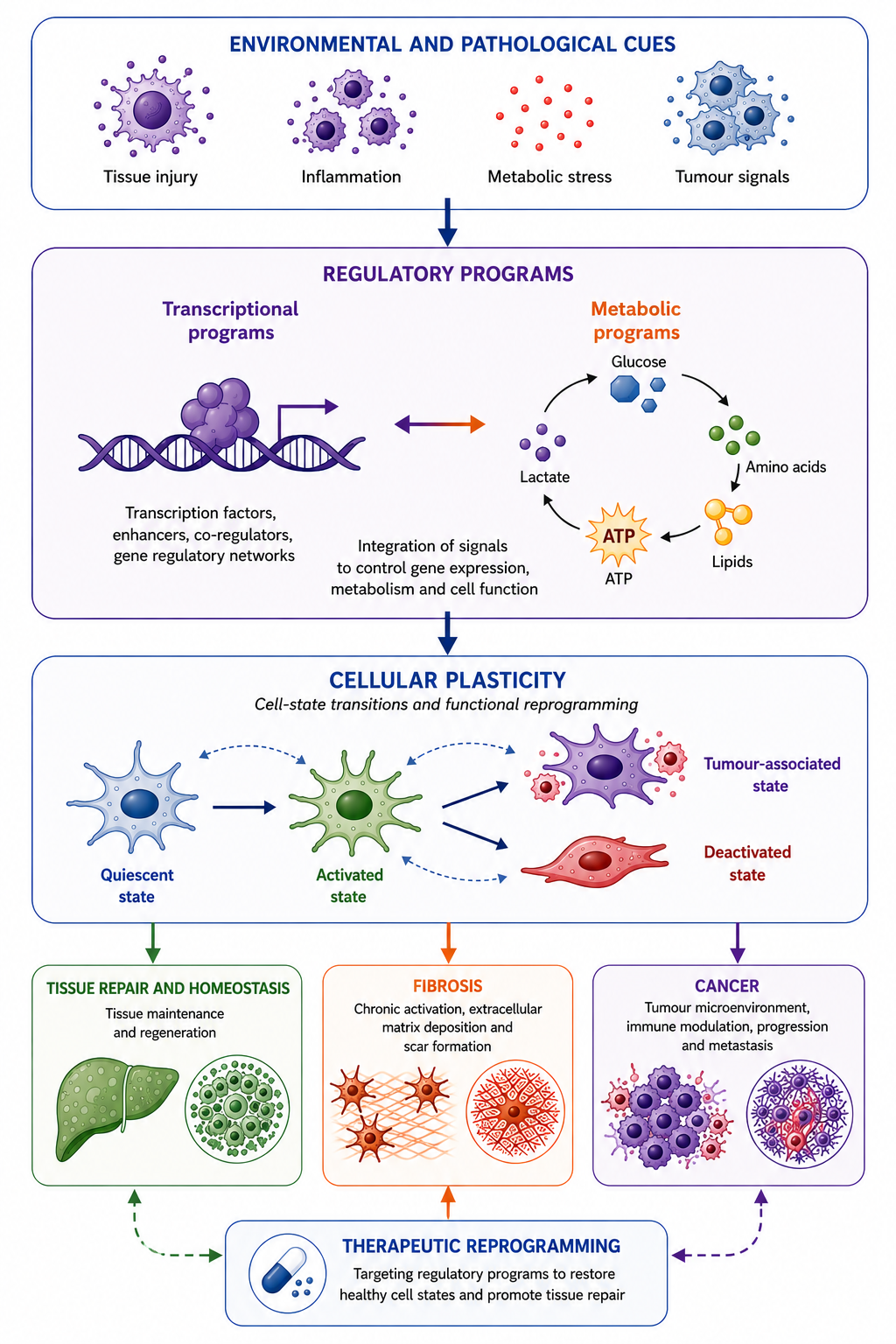 erning Cell-State Transitions
Cellular behaviour emerges from dynamic regulatory programs that integrate environmental signals and coordinate gene expression, metabolism and cellular function. We investigate how transcription factors and metabolic reprogramming control the establishment, maintenance and reversibility of distinct cellular states during tissue homeostasis and disease.
Cellular Plasticity in Fibrosis and Tissue Remodelling
Fibrosis is a consequence of the persistent activation of cellular programs that normally support tissue repair. Using liver fibrosis as an experimental model, we investigate the molecular mechanisms governing transitions between quiescent, activated and deactivated stromal cell states. We also study how metabolic reprogramming accompanies these transitions and contributes to both the development and resolution of fibrosis.
Stromal Plasticity in Cancer
The tumour microenvironment is a dynamic ecosystem in which stromal cells actively influence tumour evolution. We investigate how the transcriptional and metabolic programs of stromal cells are rewired during cancer progression and how these changes shape tumour–stroma communication, extracellular matrix remodelling and therapeutic responses.
