Células madre y neurología traslacional
Fisiopatología integrativa y terapia
Descripción
Main Research Lines:
1) To explore the therapeutic properties of stem cells in neurological disease models (neuroprotection and regeneration).
2) To elucidate the mechanisms underlying the therapeutic effects of stem cells.
3) To develop new strategies to improve the therapeutic potential of stem cells.
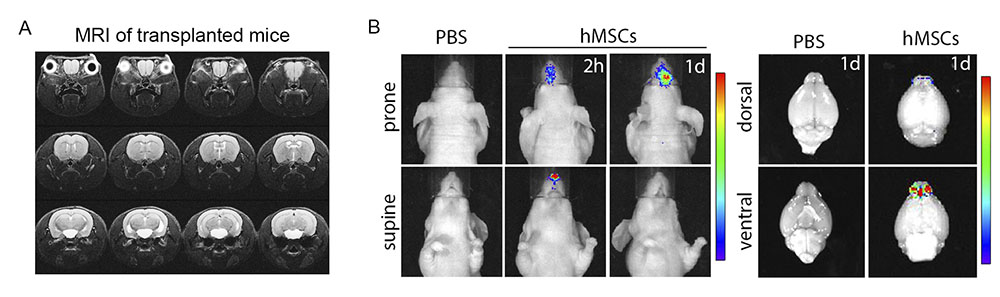
Over the past decades, a large number of studies have emerged in relation to the use of stem cell-based therapies for the treatment of different pathologies, including neurological disorders, cardiac ischemia, cancer and bone and cartilage diseases. Currently, mesenchymal stem/stromal cells (MSCs) constitute the most frequently used cell type in advanced therapies. These cells possess dynamic properties that make them a valuable therapeutic tool. Importantly, MSCs exhibit inherent ability to migrate towards damaged tissues. After engraftment, they secrete bioactive mediators, such as growth factors, cytokines and extracellular vesicles that exert immunosuppressive, anti-apoptotic, anti-fibrotic, and anti-inflammatory effects, among others. These properties have prompted the use of MSCs in preclinical and clinical studies. For this reason, it is essential to continue advancing in the knowledge of MSCs and the processes that control their properties in order to deal with the development of strategies focused on improving the health of the population.
Our group brings over 15 years of experience in stem cell research. Currently, our scientific program aims to investigate the dynamic properties of stem cells, including MSCs, to improve their therapeutic potential. In addition, we explore the use of stem cells for the treatment of central nervous system diseases. Particularly, we are interested in developing cell-based therapies to improve oncological treatments in brain tumor pediatric patients (+VIDA project, supported by the Asociación Pablo Ugarte). Our group collaborates with the Pediatric Oncology Unit of the Hospital Universitario Virgen del Rocío of Seville, led by Dr. Catalina Márquez-Vega, to better translate our research findings into direct improvements to patients’ care.
The number of people that survive cancer is increasing due to advances in early detection and treatments for cancer. For this reason, more attention is being paid to the impact of cancer treatments on patients’ health and quality of life. Radiotherapy is one of the most common treatments for cancer. Around 50% of all tumor patients receive radiation at a given time. Unfortunately, radiotherapy comes with short and long term side effects. In particular, radiation for brain tumors produces neurofunctional sequelae, which may be progressive and permanent. The most frequently described neurological alterations of cranial radiation include learning and memory difficulties, problems in executive functions, reduced processing speed, attention deficits, visual alterations and intellectual decline among others. These neurological sequelae primarily affect pediatric patients because their developing brains are more radiosensitive. Therefore, there is an urgent need to develop new strategies to prevent radiation side effects and promote a healthy cancer-free life.
Our research group faces this challenge from two complementary perspectives: reducing neurotoxicity of radiotherapy in non-tumor cells and increasing radiosensitivity of brain tumor cells. Currently, we have demonstrated that MSCs exhibit neuroprotective effects in a preclinical mouse model of cranial radiotherapy. Importantly, this cell-based strategy reduced radiation-related damages, including cognitive deficits in a safe and effective manner. Importantly, we are exploring the mechanism underliying the therapeutic effects of MSCs. Now, we want to further investigate this line of research by developing more personalized therapies, which would represent an interesting option for clinical application in cancer and other diseases.
Financial support:
2025-2029. Agencia Estatal de Investigación. RYC2023-043933-I.
2024-2026. Institute of Health Carlos III. PI23/00315
2024-2026. Agencia Estatal de Investigación. CPP2023-010925
2023-2024. Agencia Estatal de Investigación. RED2022-134081-T
2022-2024. Fundação de Amparo à Pesquisa do Estado de São Paulo. 2022/02876-0
2022-2023. Junta de Andalucía. PY20/00481
2021-2023. Institute of Health Carlos III. PI20/00341
2020-2023. Institute of Health Carlos III. CP19/00046
2020-2022. Asociación Española Contra el Cáncer. IDEAS20051CAPI
2020- current. Asociación Pablo Ugarte. +VIDA Project (https://www.asociacionpablougarte.es/proyecto-VIDA/)
If you are interested in applying to a doctoral or postdoctoral fellowship programme with us, send a motivation letter, CV and contact details to vivian.capilla@cabimer.es
Miembros actuales


Contacto
Email: contacto@cabimer.es
Web: https://cabimer.sombradoble.es
