


Dra. Cristina Aguilera
Current cancer therapies have significantly improved patient survival rates. However, despite these important advances, in some cases, patients do not respond to these therapies or develop resistance to them, facilitating the progression of the disease.
The cause of the failure of these treatments is still unknown, but it seems to be associated with the fact that, in a tumour, all cells are different both genetically (the type of mutations they accumulate) and non-genetically (the genes they express and how they express them, the organisation of their DNA and their metabolism). This is known as intratumoural variability and means that each cell may have a different sensitivity to these treatments and may even adapt to them in order to survive.
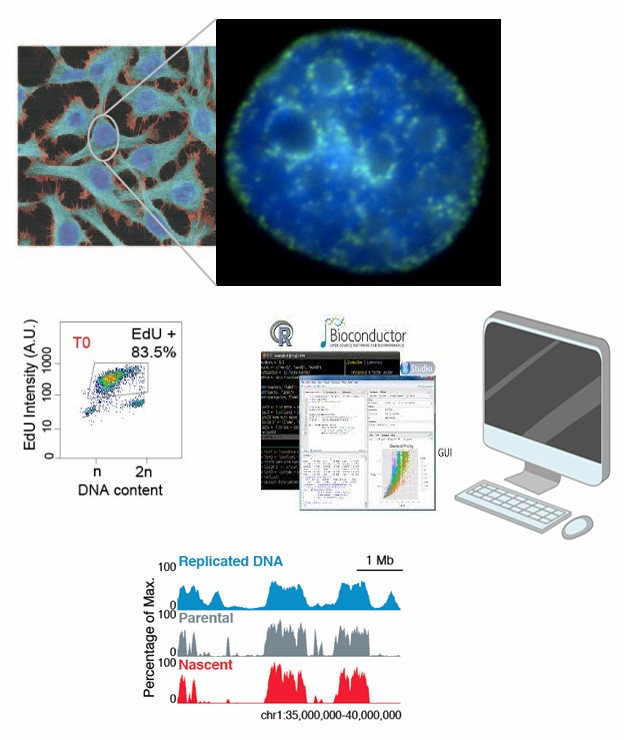
Until now, most research has focused on understanding the genetic component of cancer, and we know very little about the influence of this non-genetic component, mainly because these are transient events that are very difficult to study. In our laboratory, we have developed a new technology that has allowed us to discover how DNA duplication is an important source of non-genetic variability that may be regulating changes in cell identity that facilitate cancer progression and even resistance to treatment. Now, using this new technology in human tumour cell lines, we are studying the molecular mechanisms involved in the regulation of this non-genetic variability to identify possible targets with therapeutic value in cancer patients. This opens up a new field of study in oncology and represents an excellent opportunity to develop more effective therapies that reduce the likelihood of metastasis and the development of resistance.
