


Dra. Patricia Altea
Metastasis, the main obstacle in the fight against cancer
Despite impressive advances in early detection and treatment of primary tumours, most cancer deaths are due to metastasis, the process by which cancer cells leave their place of origin and colonise other organs. Today, there are no effective treatments to prevent or stop this process, and we do not fully understand why it occurs.
This is especially critical in the case of breast cancer, the most common type among women worldwide and responsible for nearly 700,000 deaths per year, most of them due to the development of metastasis.
What have we found?
In our laboratory, we work to answer a key question: How do metastatic cells survive and thrive in the new organs where they attempt to grow? To do this, we investigate cellular metabolism, i.e., how these cells feed, adapt, and use the nutrients available in each organ to form new tumours. Our laboratory has discovered that certain nutrients present in the diet, such as the fatty acid palmitate, help metastatic cells to grow in organs such as the lung and liver.
What are we looking for?
We want to gain a thorough understanding of how different diets affect metastasis in order to uncover new ‘vulnerable pathways’ and, from there, develop new specific therapies or dietary strategies to support treatments that block these processes.
How do we do it?
We study how metastatic cells modify their metabolism depending on the organ to which they migrate, and how the nutrients we consume in our diet influence this process. We use state-of-the-art tools—such as multi-omic analyses, in vivo models, and patient samples—and work closely with clinical oncology professionals at Spanish hospitals.
Why do we need your support?
To design treatments that interfere with the way metastatic cells use nutrients such as palmitate.
To establish new clinical guidelines that consider the metabolic profile of the tumour to predict the risk of metastasis.
To develop dietary guidelines based on scientific evidence that help control the patient’s metabolic environment.
Adapt treatments for patients with obesity, a group that is particularly vulnerable to metastatic progression and currently lacks personalised therapies.
Figure 1. Metastatic breast cancer. Breast cancer cells spread to other parts of the body, including the bones, lungs, brain, or liver, and form secondary tumours. The metastatic cascade is the process by which tumour cells escape from the original tumour, travel through the body, and establish themselves in distant organs. To survive and grow in these new environments, the cells adapt by using available metabolites, such as palmitate.
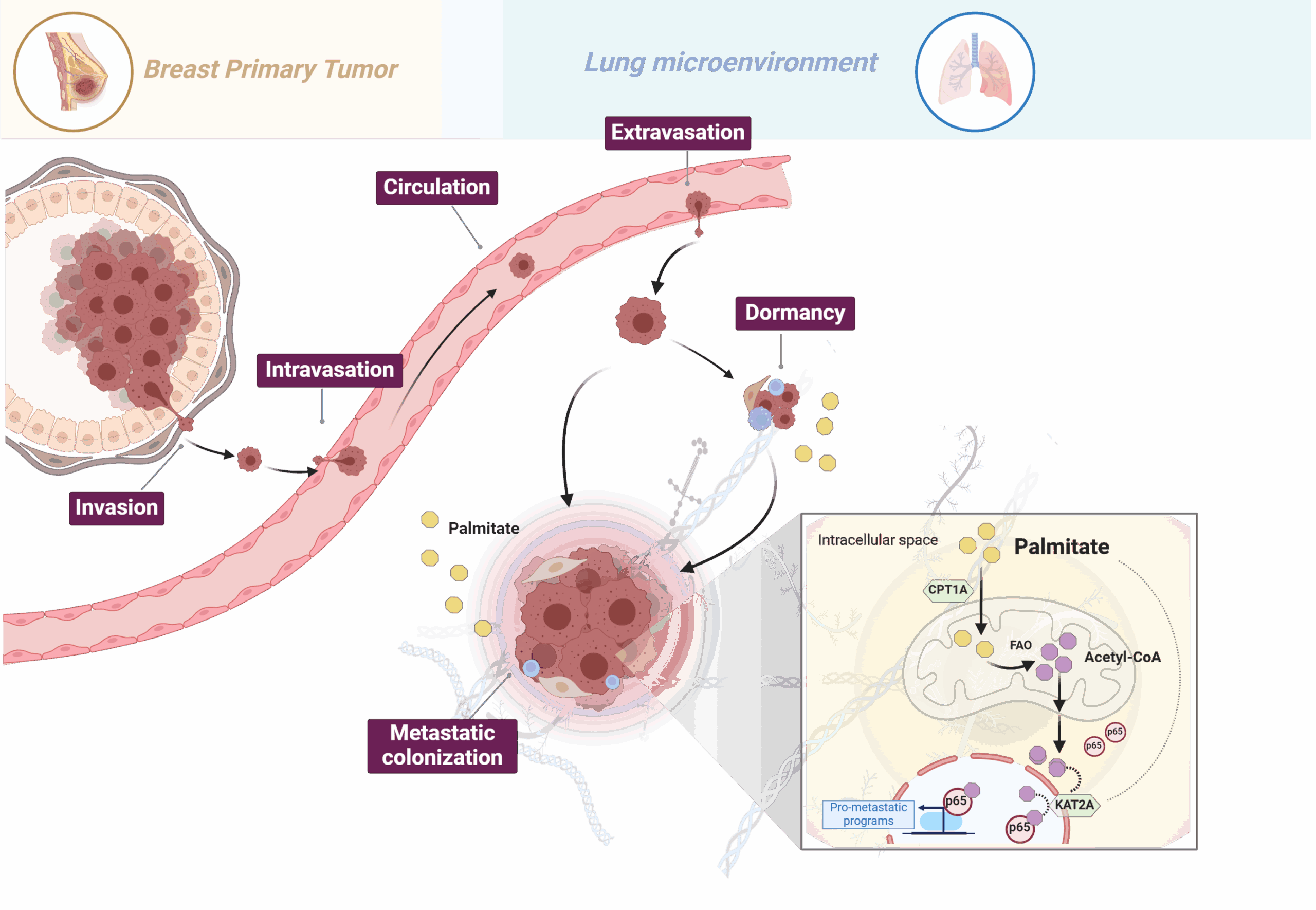
Figure 2. Metastatic cascade from the primary breast tumour to the lung.
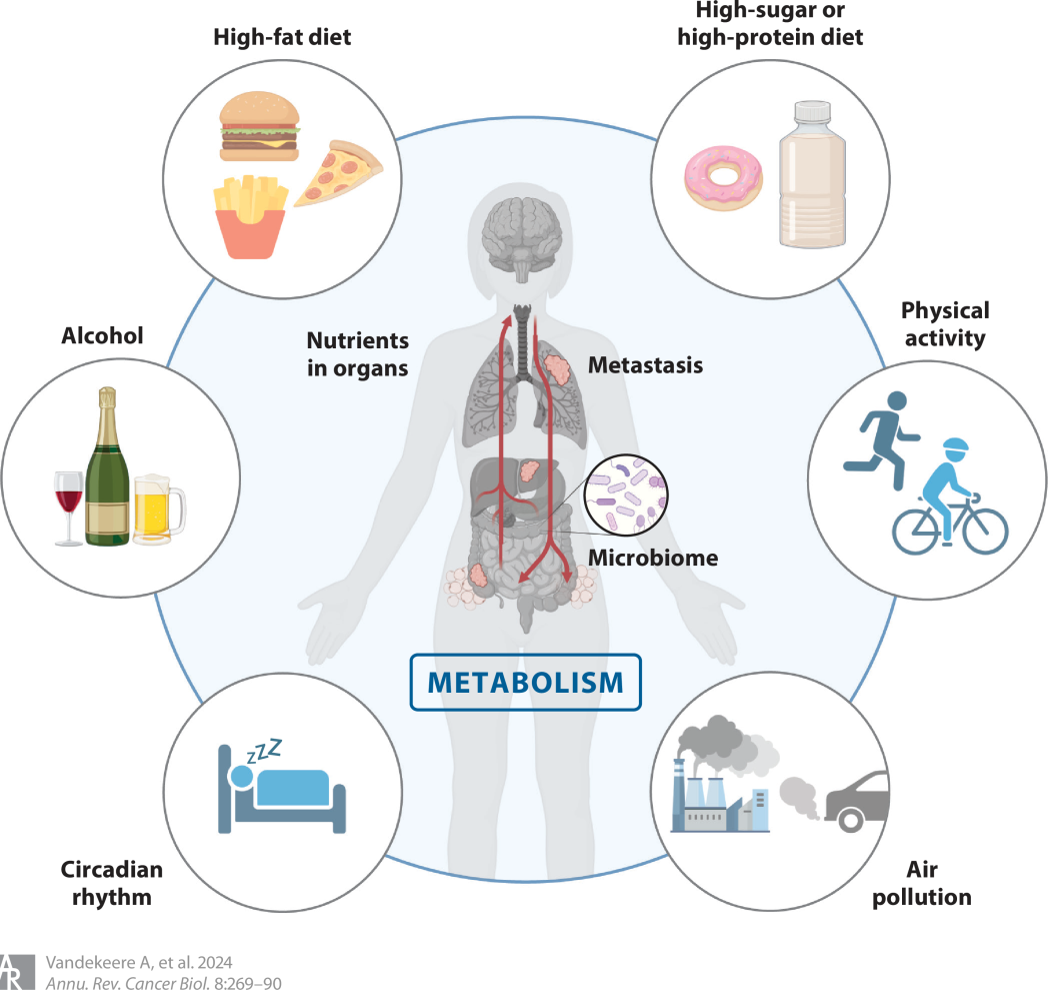
Figure 3. Nutrients and metastasis. Patient-dependent factors such as diet, alcohol, pollution, exercise, or microbiota can alter the body’s metabolism. These metabolic changes can influence metastasis formation because they affect which nutrients are available in organs, making it easier or more difficult for tumour cells to establish themselves in those organs.
