
José Carlos Reyes, director of the Andalusian Centre for Molecular Biology and Regenerative Medicine (CABIMER), explains that ‘CHD8 is a gene that we all have on chromosome 14, which is essential for regulating the expression of many other genes during brain development.’
In people with this syndrome, one of the two copies of the gene is altered, in most cases due to a de novo mutation during gestation. This alteration can cause a variable combination of symptoms: autism, macrocephaly, digestive problems, seizures, heart malformations, metabolic disorders, cognitive impairment and physical traits such as tall stature and widely spaced eyes. ‘Not everyone has all of these symptoms. It varies greatly from one case to another,’ says Reyes, who is also a research scientist at the Spanish National Research Council (CSIC).
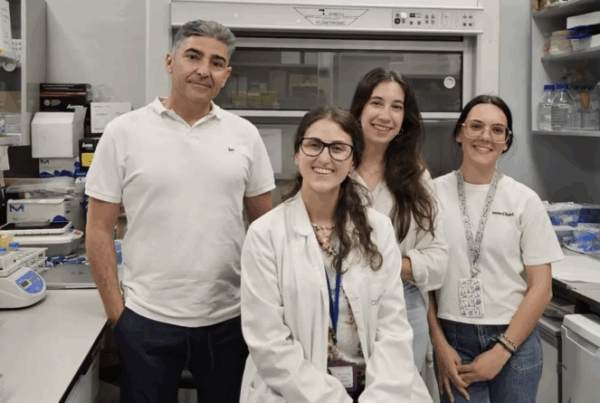
Reyes’ team has been researching this gene for almost two decades. They are the only ones in Spain working with it. ‘We have studied how the CHD8 gene behaves in healthy conditions with cell cultures, and what happens when the protein it produces is missing,’ explains the scientist.
For years, Reyes searched unsuccessfully for cases of CHD8 syndrome in Spain. Until, just over a year ago, he found Noelia, like Trini, thanks to an interview in the media. That discovery changed everything. They are now working with samples from Emuná patients to analyse their genome.