Hit enter to search or ESC to close
Close Search
Cabimer
account
Menu
  • About us
  • Research
    • Departments
    • Publications
    • Projects
  • Services
    • Core facility
    • Administration
  • Staff
  • Society
    • News
    • Outreach
    • Job offers
  • Donations
  • Español
  • account
News

Behind his diagnosis of autism lay a rare disease: ‘Genetic testing must be done.’

adminadminJanuary 27, 2026

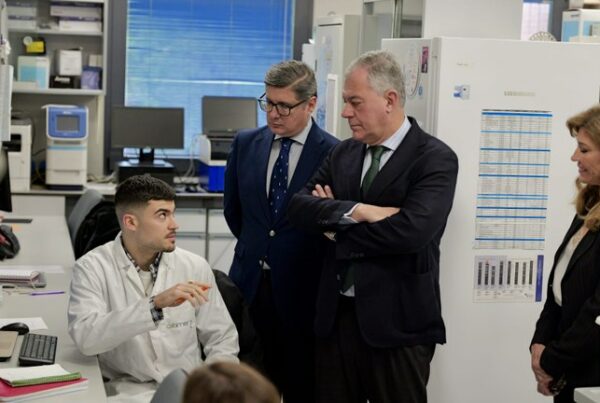
José Carlos Reyes, director of the Andalusian Centre for Molecular Biology and Regenerative Medicine (CABIMER), explains that ‘CHD8 is a gene that we all have on chromosome 14, which is essential for regulating the expression of many other genes during brain development.’

In people with this syndrome, one of the two copies of the gene is altered, in most cases due to a de novo mutation during gestation. This alteration can cause a variable combination of symptoms: autism, macrocephaly, digestive problems, seizures, heart malformations, metabolic disorders, cognitive impairment and physical traits such as tall stature and widely spaced eyes. ‘Not everyone has all of these symptoms. It varies greatly from one case to another,’ says Reyes, who is also a research scientist at the Spanish National Research Council (CSIC).

Reyes’ team has been researching this gene for almost two decades. They are the only ones in Spain working with it. ‘We have studied how the CHD8 gene behaves in healthy conditions with cell cultures, and what happens when the protein it produces is missing,’ explains the scientist.

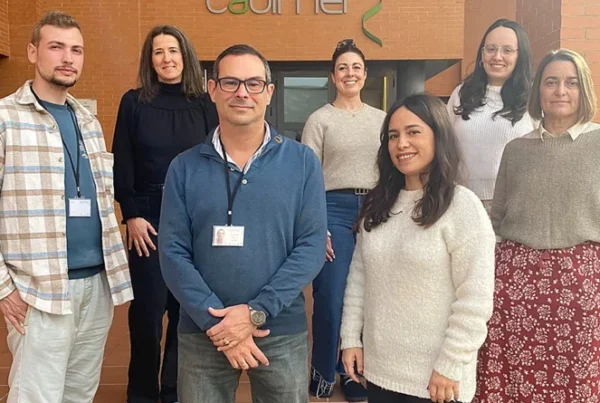
For years, Reyes searched unsuccessfully for cases of CHD8 syndrome in Spain. Until, just over a year ago, he found Noelia, like Trini, thanks to an interview in the media. That discovery changed everything. They are now working with samples from Emuná patients to analyse their genome.
https://www.telecinco.es/noticias/salud/20250501/sindrome-chd8-enfermedad-rara-autismo-pruebas-geneticas_18_015436978.html

  • Previous PostUS study at CABIMER reveals advances in halting DNA deterioration

  • Next PostSeville researchers discover a mechanism that causes chromosomal fragility in Fanconi anaemia

Related Posts

News Patricia Altea, researcher: ‘The “scissor effect” continues to hinder women’s advancement in science.’

Patricia Altea, researcher: ‘The “scissor effect” continues to hinder women’s advancement in science.’

admin
adminJanuary 27, 2026
News US study at CABIMER reveals advances in halting DNA deterioration

US study at CABIMER reveals advances in halting DNA deterioration

admin
adminJanuary 27, 2026
News Seville researchers discover a mechanism that causes chromosomal fragility in Fanconi anaemia

Seville researchers discover a mechanism that causes chromosomal fragility in Fanconi anaemia

admin
adminJanuary 27, 2026
Share
Share Share Share Pin

Contacte con nosotros

Avda. Americo Vespucio 24. Edif. CABIMER
Parque Científico y Tecnológico Cartuja
41092 – Sevilla (SPAIN)
+34 954 468 004 | info@cabimer.es
Facturación electrónica

Somos CABIMER

  • Departamentos
  • Unidades de apoyo
  • Publicaciones
  • Donaciones

Accesos

  • Correo Web
  • Intranet
  • Ofertas de trabajo
Síguenos en X
Close Menu
  • About us
  • Research
    • Departments
    • Publications
    • Projects
  • Services
    • Core facility
    • Administration
  • Staff
  • Society
    • News
    • Outreach
    • Job offers
  • Donations
  • Español

Contacte con nosotros

Avda. Americo Vespucio 24. Edif. CABIMER
Parque Científico y Tecnológico Cartuja
41092 – Sevilla (SPAIN)
+34 954 468 004 | info@cabimer.es