
Transcription and mRNA processing
Genome Biology
Description
Our research group at CABIMER focuses on the molecular mechanisms that coordinate transcription elongation with co-transcriptional RNA processing and DNA topology. We aim to understand how RNA polymerase II (RNAPII) progression is tightly regulated by chromatin structure, topoisomerase activity, and RNA processing pathways to ensure accurate gene expression.
Topoisomerase II-RNA modification axis
Topoisomerase II (TOP2) is an essential enzyme that regulates DNA topology by removing DNA supercoiling generated during transcription. As RNAPII translocates along DNA, it creates torsional stress that must be resolved to allow proper transcriptional progression. While TOP2 has long been considered a facilitator of transcription, growing evidence, including our own work, indicates that its role is more complex, as loss of TOP2 activity can lead to both decreased and increased expression of specific genes. In this context, we investigate how DNA topology and topoisomerases actively regulate gene expression, with a particular focus on their functions in both transcription and the processing of nascent mRNA. Our work shows that TOP2 poisoning impairs transcription elongation, while defects in m6A mRNA methylation can counteract this effect, suggesting a dual role for TOP2 in balancing RNA production.
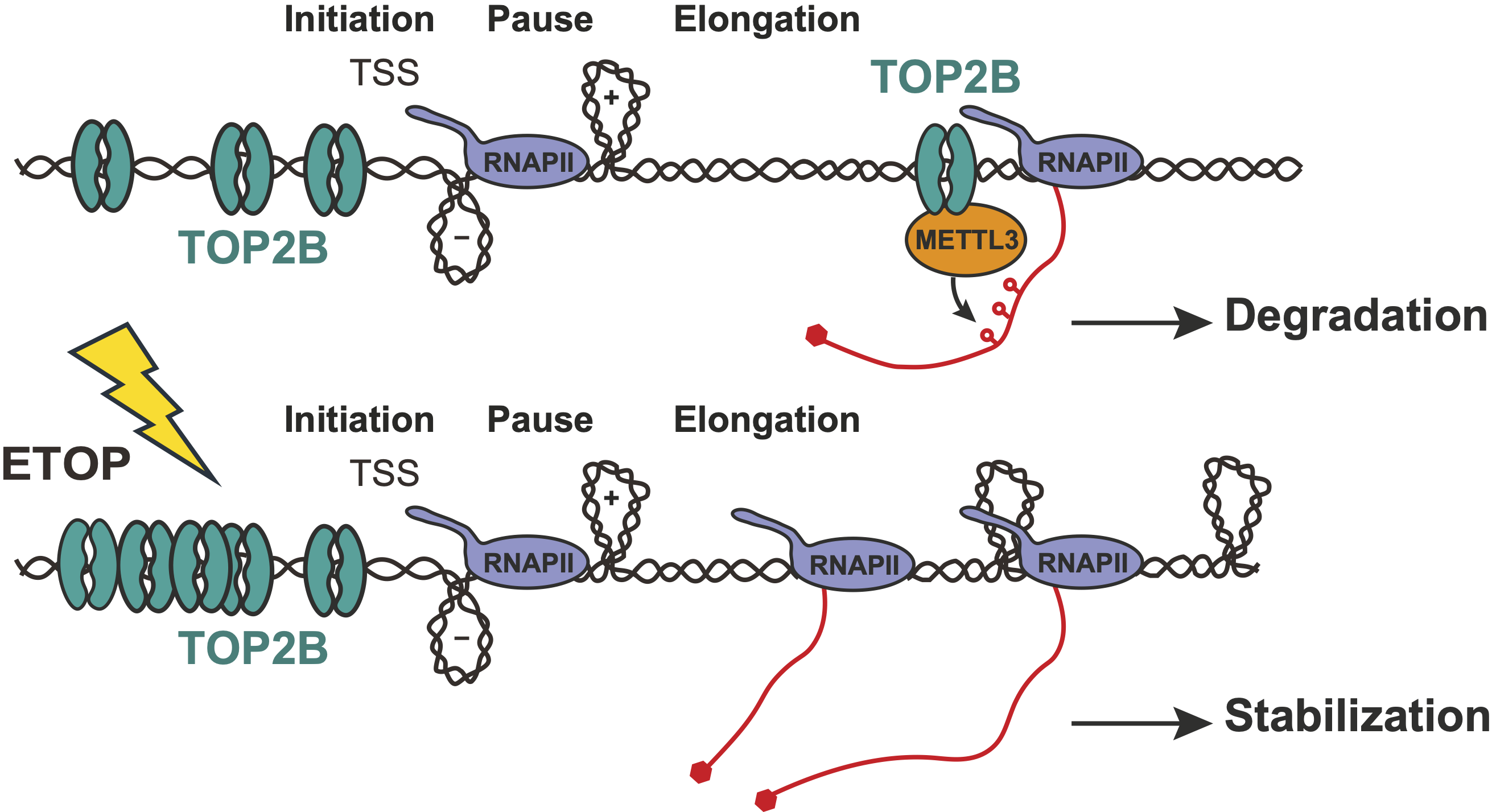
Using integrated genomic and proteomic approaches, we have identified novel TOP2-associated pathways that coordinate transcription with RNA processing, contributing to the fine-tuning of global gene expression programs.
Transcription under topological stress
The goal of this line of research is to address a fundamental and emerging question in gene regulation: how the physical state of DNA shapes transcriptional outcomes. By focusing on the role of TOP2 in coordinating transcription dynamics with RNA polymerase II activity, we aim to redefine DNA topology as a central regulatory layer of genome function rather than a passive structural constraint. Our work seeks to uncover how cells sense and respond to topological stress to preserve transcriptional fidelity and genome stability, revealing previously unrecognized mechanisms that link chromatin organization and transcription elongation. Ultimately, this line of research has the potential to transform our understanding of how widely used chemotherapeutic agents targeting topoisomerases affect gene expression, opening new avenues for the development of more precise and less harmful therapeutic strategies with broad implications in cancer and beyond.
ORCID: 0000-0002-6223-9573
Researcher ID: C-2207-2017
Scopus: 15132366300
